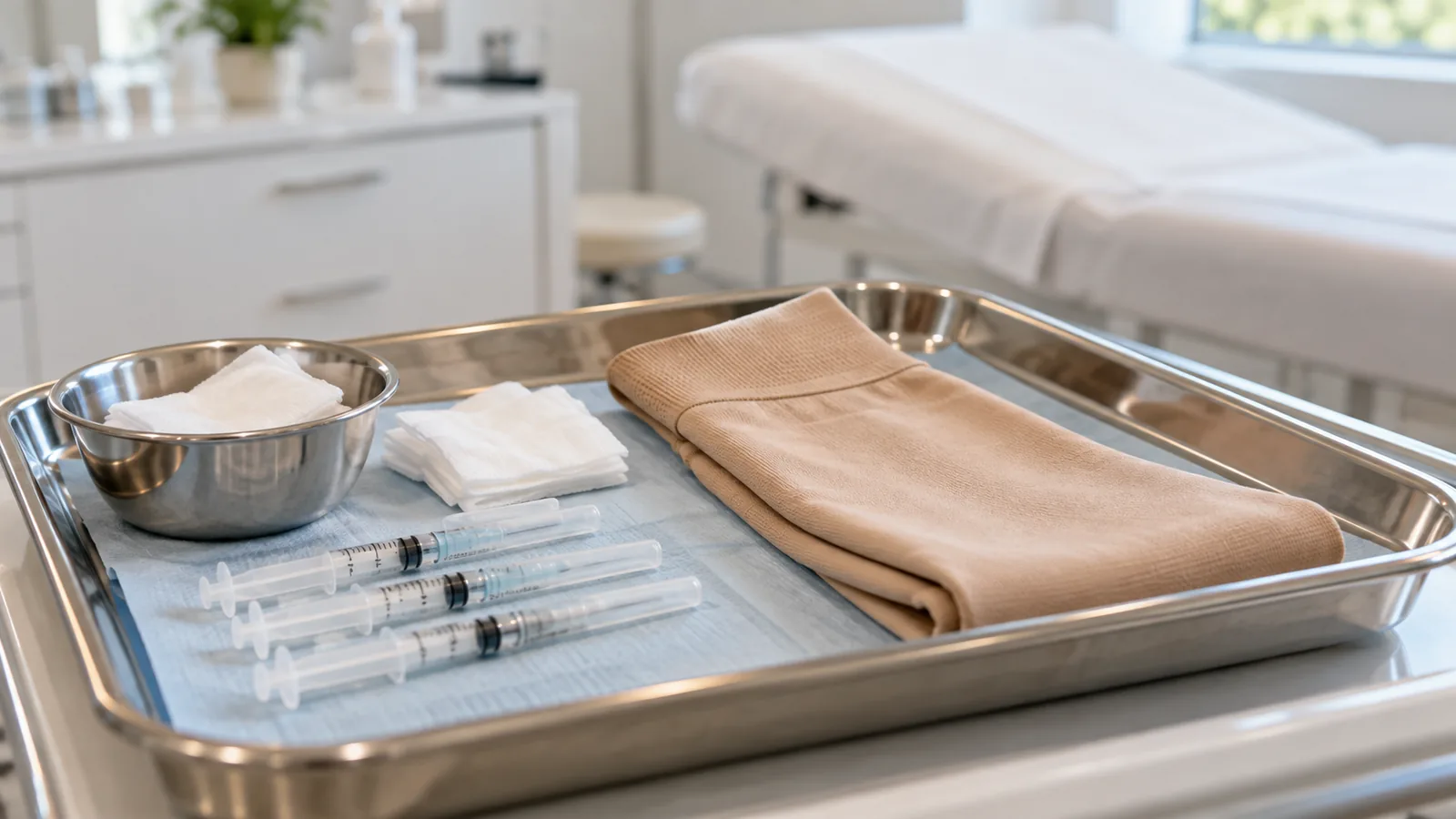

Diabetic foot prevention begins before a wound develops. Diabetes, sensation, circulation, footwear pressure and skin condition all contribute to risk, but not everyone has the same abnormalities. Information about diabetic foot care at Medivás explains why assessment should be individual and should not be limited to asking whether the foot hurts.
This guide organises daily care and signs requiring attention. Its aim is earlier detection and coordinated professional care. An active lesion should not be treated as a routine prevention issue: it may need prompt assessment even when it appears small, especially with reduced sensation or vascular disease.
Why an injury may go unnoticed
Neuropathy can reduce awareness of pressure, pain and temperature. Rubbing, a blister or an object inside a shoe may cause damage without the usual warning sensation. Absence of pain does not mean the foot is protected. Inspection therefore has a role that cannot be replaced by waiting until something feels wrong.
Circulation also matters. Reduced blood supply can impair healing and make infection more difficult to manage. Sensation and circulation are different aspects of risk, although they may coexist. Assessment should consider both and explain which findings change prevention or the urgency of a lesion. Understanding the distinction helps clarify why a painless foot may still need careful protection and regular professional review.
Professional review involves more than checking nails
Assessment may include sensation, pulses, skin, deformity, movement and pressure areas. Previous ulceration or amputation, kidney disease and other factors can alter follow-up needs. The aim is to identify requirements before a lesion progresses rather than wait for an advanced problem.
Podiatry can contribute to care and adaptation, while vascular assessment considers circulation where appropriate. Coordination with endocrinology and nutrition integrates metabolic management. No single component replaces the others when several risks coexist. A clear overall plan helps ensure that a foot problem is not treated as an isolated nail, skin or footwear issue when broader factors affect healing and prevention.
What to do about a blister or wound
Do not ignore it because it is painless. Contact a healthcare service for assessment and instructions, particularly with redness, warmth, swelling, discharge, odour or colour change. A small-looking lesion may still need priority attention according to history and examination.
Do not cut tissue, puncture a blister or use corrosive products to remove calluses. Leftover antibiotics and household remedies are not substitutes for assessment. Cleaning and protection should follow appropriate guidance, and pressure may need to be reduced through a professionally selected offloading strategy. Continuing ordinary walking on a vulnerable area may prevent recovery even when a dressing appears to cover it adequately.
A hot swollen foot also needs assessment
In someone with neuropathy, a red, warm and swollen foot can have several important causes. It should not automatically be treated as a minor sprain, and lack of pain is not permission to continue walking normally. Assessment needs to consider infection and other problems, including conditions affecting bones and joints.
Fever, general illness, rapidly spreading redness or a deteriorating wound requires urgent attention. So does a foot that suddenly becomes cold, pale or very painful. A routine prevention appointment should not delay assessment of an acute change. When contacting a service, describe the new findings clearly rather than only state that you have diabetes and would like a foot check.
Metabolic control and vascular health
Foot care fits within overall diabetes management. Glucose, blood pressure and other factors are managed individually with the treating team. Smoking cessation where relevant and review of vascular risk treatment may form part of prevention. The goal is not an isolated numerical target without regard to the person's circumstances.
Good glucose control does not remove the need for foot inspection when neuropathy or previous lesions are present. Equally, developing a wound should not be interpreted as personal failure. Identifying modifiable factors and arranging coordinated care is more useful than blame or delay. Discussing practical difficulties honestly helps the team adapt recommendations rather than assume that every part of the plan is easy to follow.
Activity and offloading have different purposes
Physical activity may support general health, but an active lesion can require reducing load on a particular area. Walking more is not always the appropriate response to an ulcer. The team should specify suitable activity and protection rather than leave you to improvise supports that shift pressure onto another vulnerable point.
Offloading devices and therapeutic footwear need fitting and review. Buying a wide shoe alone may not address a problem requiring a specific solution. If a device is difficult to use, explain this: a recommendation that is not used in practice needs reassessment for protection to be effective. The goal is a workable strategy that balances wound care, safety and necessary daily movement.
Organising help when self-care is difficult
Reduced vision, limited mobility or difficulty reaching the feet can prevent adequate inspection. Asking for help is part of the plan rather than a minor extra. A relative, carer or professional may assist according to circumstances. The routine should remain respectful, practical and sustainable.
Clarify which changes the helper should report and where to contact. A photograph can help describe a finding but should not replace examination of a lesion when assessment is needed. Keeping reports and the medicine list accessible also supports care if a problem develops away from the usual clinic. Planning this support before an injury appears makes a prompt response easier if circumstances change.
Checking the feet simply and regularly
It can help to keep a chair and a mirror near the place where you take off your socks. Use good light and sit down if balancing on one foot is difficult. First look at the socks: a new stain of blood or moisture may draw attention to a wound that you did not feel. Then look at the top, both sides, the back of the heel and the sole of each foot. Gently separate the toes to see the spaces between them. Comparing the two feet can help you describe a change, although similarity alone cannot rule out a problem.
Washing is another opportunity to notice cracks. Use lukewarm water and check it with your elbow if your feet do not reliably distinguish hot from cold. Pat the skin dry and give the spaces between the toes a moment of their own. If intact skin tends to crack, ask about a suitable moisturiser for the tops and soles; leave the spaces between the toes free of cream. There is no need to soak your feet for long periods or use disinfectant as a preventive measure. A wound that is already receiving treatment may need different care: follow the instructions from the team looking after it.
Sometimes the first clue is out of sight. A small stone in a shoe can press against the same spot for an entire walk without causing enough discomfort to alert you. Before putting your shoes on, empty them, look at the lining and check that the insole has not folded over. If you find a rubbed area after taking a pair off, avoid wearing that pair again until you know how to address the cause. A new blister is a reason to get advice, even if your next routine review is coming up soon.
Choosing footwear for fit and function
Think about the shoes you actually wear in a typical week. Your work shoes may fit well, but perhaps you spend the evening in loose slippers or take the dog out in boots that pinch. How long an area is exposed and where the pressure falls both matter. When buying shoes, try both on with your usual socks. Stand with support if you need it and check that your toes are not curled or crowded. Do not count on narrow shoes stretching with use, especially if reduced sensation makes a tight fit hard to judge.
Take a prescribed insole with you when you try on a new pair. It takes up room and can change where your heel sits. Adding a second cushioned insert yourself will not necessarily protect the foot better; it can push the toes closer to the top of the shoe. Seek advice if the heel slips when you walk or if a mark repeatedly appears in the same place. Bringing the shoes to the appointment lets the clinician inspect a seam or an area of wear that would be difficult to describe over the phone.
A holiday can bring unfamiliar surfaces, temperatures and walking distances. Pack a pair you already wear without problems and check the inside after walking on sand or gravel. Avoid bare feet on hot paving and do not use a hot water bottle to warm cold feet. With reduced sensation, a burn can develop before you feel enough heat to move away. At home, too, it helps to have protective footwear that is easy to put on when you get up during the night.
What podiatric and vascular assessment may examine
An assessment answers two different questions: can you detect the pressure that would normally make you shift position, and is enough blood reaching the tissues? A clinician may use a thin filament to check protective sensation at particular points. This is not a test of how much pain you can tolerate. Trying to copy it at home with a pin or other sharp instrument risks injuring the skin. Ask what the result means for your own care, whether your risk category has changed and when it should next be checked.
When assessing the circulation, the team considers your symptoms along with the appearance of the foot and examination of its pulses. Other tests may be needed if arterial disease is suspected. Mention discomfort that starts after walking a similar distance and settles when you rest, pain at rest, or a wound that has been slow to heal. Previous varicose veins describe a problem in the veins; that history does not, by itself, establish whether the arteries are healthy. Ask the professional familiar with your circulation before using compression over a foot with a wound.
The result is more informative than a simple pass or fail. Someone whose ulcer has closed still needs a plan for protecting that site and the other foot. Another person may have intact sensation and pulses and need periodic review and sensible footwear advice. A useful question before leaving is, “Which finding determined my level of risk and what should I do if something changes before my next visit?”
Preparing for a consultation that answers your questions
When calling about a recent injury, start with the information that helps the person taking the call decide how urgently you need to be seen. Say that you have diabetes, when you noticed the problem, where it is and how you feel. “There is an open blister under my big toe which I saw this morning; it does not hurt and I have had an ulcer before” says more than asking to book a foot check. Mention spreading redness, fever, feeling unwell or a sudden colour change. Do not delay calling to collect photos or paperwork when something is worrying.
For a preventive appointment there is more time to prepare. Bring your work shoes and, if applicable, the support you use for walking. If you have had a wound before, explain which foot it affected, how it healed and what support you needed. Let the team know if you receive dialysis, have difficulty seeing the soles, or struggle to manage the fastenings on your shoes. Those details can change the review schedule and help the team suggest things that you can actually do in your own surroundings.
Before leaving, ask to be shown the exact area that needs watching. Write down who you should contact during normal opening hours and which service to use when it is closed. If you live alone, consider with someone you trust how you would get to an urgent assessment if necessary. Keeping this information with your diabetes paperwork means you do not have to organise everything for the first time when you are already worried about an injury.
Defining specific goals and reviewing expectations
One practical goal might be, “I want my partner and me to recognise the part of my heel that was vulnerable after the last wound.” The team can show you the area with and without weight on the foot, explain how to protect it and watch how you use a mirror. Another goal might be to find a shoe that you can fasten without bending down but that still holds the foot securely. These are changes you can recognise and review; they do not rely on a promise that you will never develop another wound.
If you work shifts or spend hours standing, explain what an ordinary day involves. A device intended to take pressure off the sole will have limited value if it stays by the door because nobody explained how to use it to reach the bathroom or move around indoors. Ask about those short journeys and what to do if the device rubs. Do not cut or alter it yourself; contact the team that fitted it. If you cannot work or move around safely with the plan you have been given, say so, so that alternatives can be considered.
Exercise with an intact foot and activity during recovery from an ulcer are different situations. A daily step target agreed before the injury may no longer be appropriate while the ulcer is being treated. Clarify how much weight you may put on the foot, who will check the fit of your device and when the plan will be reviewed. When the wound closes, ask about returning gradually to normal footwear and activities rather than assuming that everything can restart on the same day.
Recording progress without constant worry
A useful record can fit on one line: the date, the foot, the location and the change you noticed. For example, “Tuesday, left foot, outside edge of little toe: blood on sock after wearing black shoes.” It helps explain where to look; it does not require you to decide how serious the problem is. Note whom you contacted and what advice you received. If several people help with foot care, a shared note prevents them from describing different points in time as though each were the current situation.
A photograph can supplement the description if the clinician asks for one and offers a suitable way to send it. Use sufficient light and avoid handling a wound to make it more visible. For privacy, leave your face and unnecessary personal details out of the picture. A photo gives limited information about sensation, pulses or the depth of a wound and cannot assess a foot that has suddenly become hot and swollen in place of an urgent examination. Do not postpone seeking care to get a clearer picture or to gather several days of images.
If you are already being treated, record practical difficulties with the plan as well as changes in the foot itself. A follow-up appointment you cannot travel to, a shoe that no longer closes and nobody being available to see the sole are specific obstacles that the care team may be able to address. Letting them know gives them the opportunity to bring a review forward or adjust the instructions. Keeping a record stops being useful if it becomes a reason to watch a problem at home when it needs professional attention.
Reading health information critically
When reading a piece of advice, check whom it is intended for. A reminder to walk regularly for people with diabetes who have no active foot wound is not a recommendation to carry on walking on an ulcer. Nor does a picture advertising a sock, insole or cream demonstrate that it will reduce your particular risk. If you have reduced sensation, a deformity or a previous ulcer, ask what specific problem a product is meant to solve and whether it could interfere with the footwear or device you already use.
It helps to distinguish prevention advice from signs that call for medical attention. One blood glucose reading in range or being able to move your toes is not proof that a wound will heal. A picture on the internet cannot rule out a deep infection or establish that enough blood is reaching your foot. An open wound, an area that is turning dark or a newly hot, swollen foot needs a clinical assessment. If you also have fever, feel generally unwell or are deteriorating quickly, seek emergency care.
Professional guidelines set out how care pathways should work. Patient information turns some of those principles into actions you can take day to day. In Madrid, the team that looks after your diabetes can tell you which local service to contact and where to go outside opening hours. Keep that answer with your foot care instructions. The next time you read that a wound needs prompt attention, you will know whom to call without having to search for a number on social media at the last minute.
Frequently asked questions about diabetic foot prevention
Can I wait with a wound if it does not hurt?
Pain is not a safe criterion. Neuropathy may reduce pain precisely when a lesion is present. Obtain healthcare advice for a new wound and urgent care for infection signs or deterioration. The response depends on the presentation rather than on pain intensity alone.
Can I use pharmacy corn-removal products?
Products that burn or remove tissue can cause injury, particularly with impaired sensation or circulation. Do not use them without professional advice. Callus care should address the pressure causing it and the foot's risk level rather than focus only on removing the visible hard skin.
Does everyone need the same review schedule?
No. Frequency and preventive measures depend on findings and history. Ask about your risk, required care and when to return. Written advice helps distinguish a preventive review from contact about a new lesion that may need earlier assessment.
How can I arrange a review?
You can contact Medivás, explaining whether you want prevention advice or already have a lesion. That distinction helps establish priority. Infection signs, a suddenly cold foot or rapid deterioration require urgent healthcare attention rather than waiting for an ordinary appointment.
Sources and further reading
- NIDDK · Diabetes and foot problems
- NICE NG19 · Diabetic foot problems
- CDC · Your feet and diabetes
- IWGDF · Guidelines on the prevention and management of diabetes-related foot disease
Educational content by Clínica Medivás. It does not provide an individual diagnosis or replace a consultation.
This content is for information only and does not replace an individual medical assessment. Seek appropriate medical care for acute or worrying symptoms.