
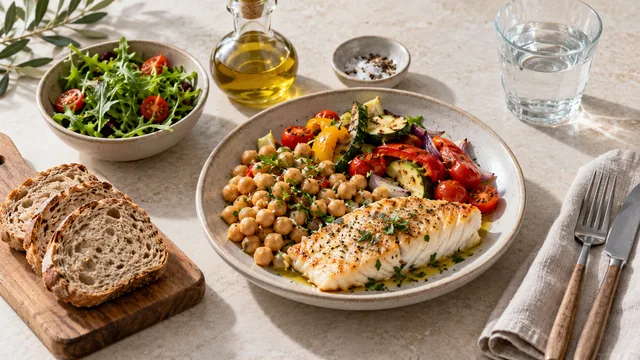
Nutrition and vascular health are connected, but it helps to distinguish what eating habits can improve from what needs another form of care. A diet does not remove varicose veins or replace assessment of arterial disease. It can contribute to managing diabetes, blood pressure, lipids and excess weight when these are addressed individually. Endocrinology and nutrition at Medivás can bring those elements together.
This guide offers a practical view of cardiometabolic risk without miracle diets or foods claimed to cleanse the veins. The aim is sustainable decisions and understanding when professional assessment offers more than repeated restrictions. Needs vary with age, history, medication, activity and the person's relationship with food.
Arteries and veins have different roles
Arteries carry blood from the heart to tissues; veins contribute to its return. Atherosclerosis and venous disease are not the same process. Using the broad word circulation without distinction can lead to claims about food that do not match the condition. A cardiovascular nutrition plan does not close a vein with reflux.
With varicose veins, eating habits may support general health and associated factors while venous assessment addresses the specific problem. Pain when walking or a poorly healing wound may require assessment of arterial supply or another cause. Coordination avoids presenting diet as the sole answer to symptoms needing diagnosis. Healthy eating remains useful without being described as a cure for every vascular condition.
What cardiometabolic risk means
The term brings together factors influencing cardiovascular and metabolic disease. Blood pressure, glucose, lipid profile, smoking, activity, history and body characteristics may all be considered. No isolated number tells the complete story. Interpretation depends on context and may lead to lifestyle measures, medical treatment or both.
It should not mean labelling someone by weight. Two people at a similar weight may have different health situations. Assessment should consider history, habits, indicated tests and practical barriers. The goal is lower risk and better function rather than pursuing a particular appearance as a substitute for health. Clear priorities can make the plan more useful than trying to change every possible factor at once.
The eating pattern matters more than one ingredient
A varied pattern including vegetables, fruit, pulses, whole grains and suitable protein sources can support health. Fat sources and the overall balance of foods matter as well. Every meal does not need to be perfect for the broader pattern to improve.
In practice, eating pulses more often or preparing options for busy days may be more useful than buying a supplement marketed for circulation. A Mediterranean-style pattern provides a familiar framework, but needs adaptation to taste, budget, culture and health requirements. A plan that cannot be bought, cooked or shared within ordinary family life is difficult to maintain. Practical changes deserve as much attention as nutritional theory.
Fibre and carbohydrate quality
Carbohydrate-containing foods are not all equivalent. Structure, fibre, preparation and portion size influence response and fullness. Pulses, whole fruit and whole grains should not automatically be grouped with sugary drinks simply because they contain carbohydrate. With diabetes, amount and distribution are individualised alongside treatment.
Increasing fibre may require a gradual approach if digestive symptoms occur. There is no need to move from a low-fibre routine to an extreme change overnight. Digestive conditions or particular medical advice can alter recommendations. Clinical nutrition adapts general principles to real circumstances rather than insist that one pattern suits every person without modification. A tolerable change is more likely to remain part of daily life.
Salt, prepared foods and blood pressure
Salt intake comes from more than the salt shaker. Bread, preserved foods, processed meats, sauces and prepared meals may contribute. Comparing labels within the same product category can help without turning every shopping trip into an exhaustive calculation. Preparing food more often may improve control when it is practical.
Advice is not identical for everyone, particularly with kidney disease, medication or other conditions. Salt substitutes are not automatically suitable either. Ask before using potassium-containing substitutes where your health requires caution. An apparently simple recommendation may need individual adaptation to remain safe, especially when several conditions or medicines interact with dietary choices.
Fats, cholesterol and realistic expectations
The quality of fats within the pattern matters more than eliminating all dietary fat. Food sources, amounts and replacements need consideration. Removing one product and replacing it with another poor-quality option does not guarantee a better overall pattern. Label reading and simple planning may help more than rigidly dividing foods into permitted and forbidden lists.
Blood results are interpreted alongside history and risk. Prescribed lipid medication should not be stopped because a new diet has begun. Some people need both approaches. Follow-up assesses response and allows adjustment without promising that food changes will resolve every inherited or clinical lipid abnormality. A useful plan explains how progress will be measured and when the results should be reviewed.
Weight goals beyond the scales
Where addressing excess weight is indicated, health, mobility, sleep and wellbeing deserve attention alongside kilograms. Extreme restrictions may be difficult to sustain and contribute to repeated loss and regain. A gradual, reviewable goal makes it easier to work on habits and barriers.
Obesity assessment should involve more than the same menu for everyone. History, medication, appetite, schedules and previous experiences matter. A difficult relationship with food requires particular care. Blame does not improve adherence or replace appropriate support. Discussing what happened during earlier attempts can identify practical adjustments rather than simply repeat a plan that was already hard to follow.
Diabetes and foot care belong in the same overall plan
Nutrition is part of diabetes management alongside activity, treatment and monitoring. Significant dietary changes may require medicine adjustments to avoid problems such as hypoglycaemia, so advice is important where that risk exists. The plan should explain common situations and when to seek help.
Foot health still needs attention while dietary changes are being made. Information about diabetic foot care highlights the separate roles of sensation and circulation. A lesion should not wait for a blood test to improve before receiving assessment. Different aspects of care complement one another and may require coordination rather than being addressed as a sequence in which one must be completed before another begins.
Celebrations, eating out and flexibility
A sustainable plan should work in restaurants, celebrations and busy weeks. Planning does not mean banning every exception. It may involve balanced combinations, awareness of hunger and fullness and returning to routine without extreme compensation. The long-term pattern matters more than judging one isolated meal.
Specific medical precautions, such as those relevant to some diabetes regimens, still apply. Flexibility does not mean ignoring clinical needs. Discussing real scenarios at an appointment helps identify workable options rather than a menu that only functions under ideal conditions. A plan should leave room for ordinary social life while remaining clear about situations requiring additional care.
Supplements marketed for circulation
Natural does not guarantee effectiveness or freedom from interactions. Supplements may not deliver the advertised benefit and some can interfere with medicines. They should not replace vascular treatment, metabolic management or appropriate nutrition. Bring the product name and ingredients to the consultation if you already use one.
Be cautious about promises to remove varicose veins, dissolve plaques or normalise every test result with a product. Useful medical explanations distinguish evidence, uncertainty and goals. A deficiency or specific indication may justify supplementation, but that differs from taking several products following a general commercial recommendation. The question is what an individual product is expected to achieve in your situation and whether there is a sound reason to use it.
Adapting food choices to your budget and usual shopping
A healthy eating pattern needs to fit the household budget and daily timetable. Dried or cooked pulses, frozen vegetables without added sauces and seasonal produce can all support practical shopping. Compare foods by what they contribute to the overall diet rather than by eye-catching packaging claims. A more expensive product is not automatically healthier, and simple ingredients can provide a balanced meal without specialist products or elaborate preparation.
Reading a label helps compare alternatives within the same food category. Salt content, sugars and the type of fat may guide a decision, but interpretation also depends on portion size and frequency. There is no need to turn every shopping trip into an examination or divide all foods into permitted and forbidden groups. The aim is to recognise repeated choices that would benefit from adjustment without creating guilt around eating.
Planning a few basic meals can reduce the pressure to improvise when hungry and short of time. A base of pulses, vegetables and a suitable protein source can be adapted with portions and accompaniments that meet your needs. Diabetes, kidney disease, chewing difficulties or a medical restriction may require specific changes. Sharing those constraints during a consultation helps avoid receiving a theoretical menu that cannot be used in real life.
Results need to be assessed beyond the effect of a single food. Consistency, nutritional adequacy, satisfaction and changes in relevant clinical measures all help determine whether a plan is suitable. Sustainable change often relies less on long lists of prohibitions and more on workable solutions for the difficult parts of the week. If cooking facilities, budget or family responsibilities are barriers, they belong in the discussion because they directly influence which recommendations can be maintained.
Comparing like with like: a worked example using soup
Suppose you are choosing between two ready-to-eat soups. One label says 0.9 grams of salt per 100 millilitres; the other says 0.5 grams per 100 millilitres. If your bowl actually holds 300 millilitres, the first would supply 2.7 grams of salt and the second 1.5. These are example figures, not values from a particular brand. The exercise shows why it helps to start with the same unit and then consider how much of the food you usually serve.
The European Commission explains nutrition information on packaged foods: most provide figures per 100 grams or 100 millilitres. The manufacturer’s suggested serving may be different from yours. If the front shows “per portion”, find the full panel before comparing it with another pack. Check whether you are looking at the prepared food or at a concentrate; comparing the figures for two different forms of a food may tell you very little.
There is no need to calculate every item in your basket. Start with a food you eat several times a week and one feature that matters to your plan. If that feature is salt and you like both soups, choosing the one with less salt in your actual bowl is a concrete decision. If soup is an occasional food, looking at bread, cured meats or sauces you eat almost every day may be more useful. Frequency matters as much as a striking difference between two packets.
Building two dinners from one shopping list
A short shopping list can produce different meals: cooked chickpeas, vegetables, tomatoes, wholegrain bread and eggs, for example. One evening you might combine some chickpeas with cooked vegetables and an egg; another time, make a chickpea and tomato salad with bread. These are not the two “right” dinners. The idea is to see whether a food you want to use can work in more than one texture or temperature. If a cold salad does not appeal in January, a simple stew is more useful than a recipe that stays on paper.
If time is the main obstacle, count the less obvious steps too: soaking, chopping, washing up and storing what remains. Cooked pulses or plain frozen vegetables can make a meal feasible when starting from scratch would be unrealistic. If cooking extra, separate what you plan to use and follow appropriate storage instructions. You do not have to prepare an entire week of food at once to make a pulse-based meal a more regular part of your diet.
The Spanish food safety and nutrition agency’s dietary guidance emphasises vegetables, fruit, pulses and whole grains. You can apply it to dishes the household already recognises. If Sunday lunch is usually rice, consider which vegetable or pulse would work in that recipe; there is no need to replace it with an unfamiliar dish. If someone sharing the meal has an allergy, swallowing difficulties or a specific medical diet, include those needs in the choice from the outset.
Telling a replacement apart from an addition
Changing one type of fat for another does not simply mean adding more oil or nuts to what you already eat. Think of the usual action: “At breakfast I spread butter on bread.” One possible substitution, if you enjoy it and it suits you, is to use olive oil and tomato on that bread on some days. Keeping the same amount of butter and adding oil to it is a different decision. This distinction makes it possible to discuss actual meals instead of treating each ingredient as a remedy.
The same logic applies to drinks. If you usually have a sugary drink with lunch, drinking water later in the afternoon does not change what the earlier drink supplied. Having water with some of those lunches does change the usual choice. That does not make one drink responsible for a blood test result or mean you must give up every drink you enjoy. Look for a recurring situation, decide what you would change at that moment and consider whether the alternative is available at work or at home.
Some changes are deliberate additions, such as adding vegetables to a meal that previously contained almost none. Not every choice requires taking something else away; the purpose needs to be clear. “I would like more vegetables in my meals” and “I want to replace some saturated fat” are different questions. If recommendations seem contradictory, take two examples of meals to the professional advising you. The suggestions may address different objectives that need to be explained separately.
When your results do not change as you expected
A blood test is not a test of good behaviour. If cholesterol, glucose or blood pressure remains outside the goal you agreed, it does not automatically mean you have eaten “badly” or need to remove another food group. Identify which measure is being reviewed, when it was taken and what else changed between measurements. Mention a medicine change or say if work hours or cost made it impossible to maintain the change you chose. That conversation gives the team a basis for revising the plan without making promises.
If the goal was to reduce salt in several meals, checking first whether you found alternatives you liked may tell you more than weighing yourself every day. If the main concern is low blood sugar while taking diabetes treatment, discuss it with the team managing that medicine; do not attempt to resolve it by cutting foods on your own. If you have kidney disease or another prescribed diet, ask explicitly whether general nutrition advice needs adapting before you follow it.
For your next review, write down a question that connects the food you buy to the clinical goal: “Of these foods I choose regularly, which would it make most sense to change for the issue we are treating?” That gives you a decision you can test and a sense of which measure belongs to it. It may be a measurement the clinic will take later or simply whether the choice fits into your week. Not every useful benefit shows on the scales, and diet alone does not change every clinical reading.
Frequently asked questions about food and circulation
Can any food eliminate varicose veins?
That effect should not be attributed to a food. A healthy pattern may support wellbeing and associated factors without correcting venous reflux. Symptoms or cosmetic concerns can be discussed during vascular assessment to identify the options relevant to the specific problem.
Must I remove all carbohydrates?
There is no universal recommendation to do so. Quality, quantity and context matter. With diabetes or another condition, the pattern should relate to treatment and goals. Broad restrictions without an indication can make balance and long-term maintenance more difficult rather than automatically improving health.
Is eating well enough to stop medication?
Do not stop it independently. Nutrition and medication may complement one another. The treating team reviews results and risk before altering a regimen. Feeling better or losing weight does not establish on its own that a prescribed medicine is no longer needed.
How can I begin without changing everything?
Choose specific, sustainable goals and seek help with illness, uncertainty or difficult previous attempts. You can contact Medivás for nutritional and metabolic assessment. A useful plan starts from the routine you actually have and allows review of what works in practice.
Sources and further reading
This content is for information only and does not replace an individual medical assessment. Seek appropriate medical care for acute or worrying symptoms.