Lipoedema, lymphoedema and venous swelling can all affect leg volume, but they describe different problems. Confusing them can create unrealistic expectations about exercise, diet, compression or procedures. A larger leg cannot be diagnosed by appearance alone. At Medivás, the information on lipoedema and lymphoedema provides starting points that require individual assessment.
This guide explains the main distinctions without turning them into a home diagnostic test. Some patterns offer clues, but overlap exists and more than one condition can be present. History, examination and appropriate investigations help establish which mechanism predominates and which goals are realistic for the individual person.
Lipoedema: fat distribution and associated symptoms
Lipoedema involves a disproportionate distribution of fatty tissue, usually affecting the lower limbs symmetrically and sometimes the arms. Pain, tenderness and easy bruising may occur. The feet are often relatively spared, but that observation alone cannot confirm the diagnosis or exclude another condition.
It should not simply be described as insufficient effort to lose weight. A person may have tried many diets and exercise programmes without proportionately changing the distribution that concerns them. This does not make healthy habits irrelevant; it means their goals need clear explanation. General health, function and associated factors can be addressed without promising that lifestyle changes alone will remove the condition or make every part of the body respond identically.
Lymphoedema: difficulty draining tissue fluid
Lymphoedema involves impaired lymphatic drainage and a build-up of fluid in tissues. It can have primary or secondary causes, including certain treatments, injuries and diseases. Distribution and development vary. The foot or toes may be affected, and skin texture can change over time in some people.
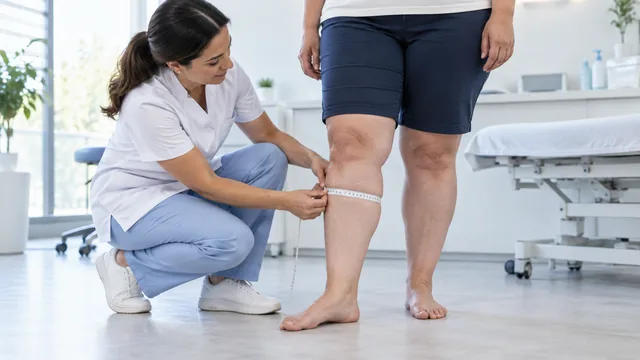
History is particularly valuable: when it started and whether surgery, radiotherapy, infection or earlier inflammatory episodes occurred. Diagnosis does not depend solely on a manoeuvre that can be copied at home. Examination and measurements help, with additional investigations used in selected situations. Management often focuses on control and function through ongoing care. Explaining that long-term approach is important so that improvement is not judged only after a single session.
Venous oedema and other causes of swelling
Venous disease may contribute to swelling, particularly in patterns that worsen while the legs remain dependent. However, medicines, systemic illness and other conditions can also cause oedema. The appearance of both legs does not establish which mechanism is operating.
Information about varicose veins can be useful when visible veins or venous symptoms are present, but the wider picture still needs review. A procedure targeting one vein should not be presented as a solution to every increase in leg volume. Where venous and lymphatic components coexist, several coordinated measures may be needed rather than a single isolated intervention chosen from appearance alone.
Clues that do not replace a diagnosis
Symmetry, tenderness, easy bruising, involvement of the feet and changes with rest can help guide assessment. No individual feature acts as a verdict. A person with lipoedema may later develop swelling from another cause, altering a previously typical pattern.
Avoid comparing your body with online stage photographs as though they provide a definitive classification. Examination also considers function, skin, mobility and everyday impact. A diagnostic label without an explanation of management may offer little practical help. The important questions are what is being treated, what can improve and which uncertainties remain. A useful assessment should explain why the proposed plan fits the findings rather than only assign a name.
Compression, movement and skin care
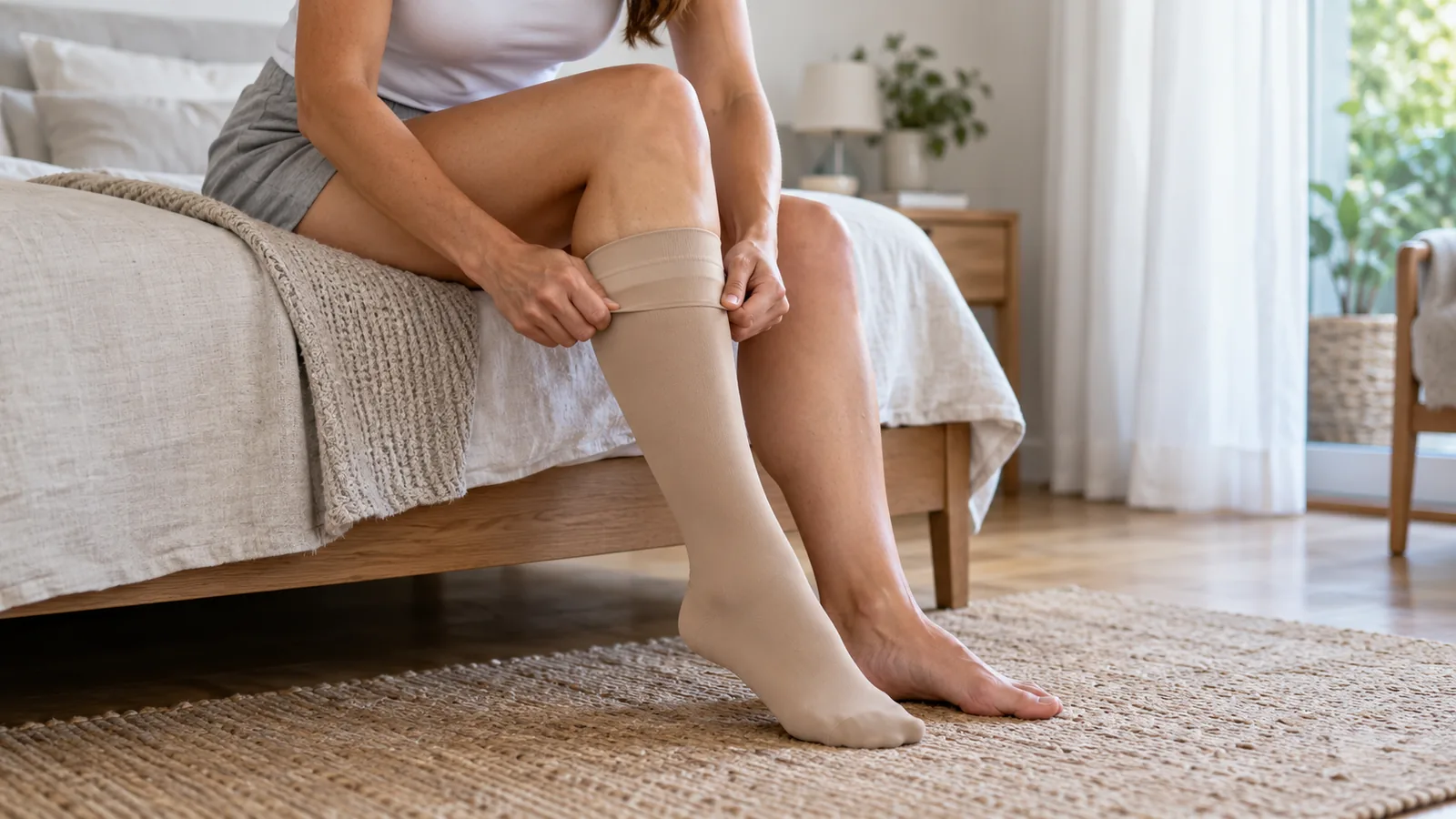
Compression may form part of management, with garments and pressures adapted to the situation. Tolerance, limb shape and the ability to put the garment on influence selection. Higher pressure is not automatically better. Arterial disease or an acute problem calls for particular care in deciding whether and how compression is used.
Adapted movement and skin care can support function and reduce complications. Selected cases may involve decongestive therapy or specialist physiotherapy. A generic massage is not equivalent to a lymphoedema programme, and one session does not replace a sustained strategy. Physiotherapy, where appropriate, should be coordinated with the diagnosis and practical needs rather than offered as the same routine for every swollen leg.
Nutrition, pain and quality of life
Diet and management of metabolic factors can be relevant, but should be discussed without blame. Where obesity or other nutritional needs coexist, endocrinology and nutrition can help establish reasonable goals. No universal diet can be promised to eliminate lipoedema or lymphoedema.
Pain and limitations affect more than limb measurements. Walking, working, resting and participating in activities all matter. Psychological support may help when the condition affects wellbeing, without implying that physical symptoms are imaginary. Care should address both physical and emotional experience. A meaningful improvement may include greater confidence or easier daily activity even when a limb's appearance does not change as much as the person originally hoped.
Understanding what happens inside the veins
Blood reaches the legs through the arteries and returns towards the heart through superficial and deep veins. Contractions of the calf muscles help move it upwards, while small valves encourage flow in the right direction. When some valves no longer close effectively, blood can flow backwards through a particular segment. This is called venous reflux and can contribute to increased pressure within parts of the venous network.
The vein visible at the surface does not necessarily explain the whole problem. It may be a branch connected to another vein with reflux, or a small surface change without significant disease in the main superficial trunks. Counting visible veins or looking at a photograph therefore cannot establish the right treatment. An examination connects the appearance with symptoms, distribution and, where appropriate, ultrasound findings.
It is also useful to separate cosmetic concerns from functional effects. Someone may be troubled by small visible veins despite having very little discomfort. Another person may experience heaviness or swelling even though changes at the surface look relatively modest. Both deserve a clear explanation, but they do not automatically require the same investigation, priority or intervention. Symptom intensity is not a precise measurement of the risk of complications either.
Family history, pregnancy, age, previous vascular events and long periods of immobility may all contribute to the overall picture. They do not establish a single cause, and they do not mean that the person has done something wrong. The consultation identifies which factors matter in that individual situation and which can realistically be changed. Understanding this distinction makes it easier to see why everyday measures may ease discomfort without removing an established vein, while a procedure targets a particular part of the circulation. Neither approach should be judged only by how a leg looks in one photograph.
What a complete vascular assessment contributes
An assessment begins with how the problem started, what changes the symptoms and how it affects everyday life. Useful details include whether one leg or both are affected, whether discomfort builds towards the evening, whether walking helps and whether anything has changed recently. Previous blood clots, procedures, pregnancies, medicines and other health conditions are also relevant to circulation and to the safety of possible treatment.
The examination may include visible veins, swelling, skin colour, temperature and skin condition. The clinician may check pulses when this helps assess arterial circulation. Leg discomfort is not always caused by veins: muscle, joint, nerve and lymphatic problems can produce overlapping symptoms. Several causes may exist together, in which case a particularly clear discussion about expectations is important before choosing an intervention.
Duplex ultrasound combines images of the structures with information about blood flow. When indicated, it can assess whether veins are open, the direction of flow and possible sites of reflux. Its purpose is not simply to add a routine test. It should answer questions that could change the diagnosis or the choice of treatment. The findings must be interpreted alongside the history and examination, rather than as a collection of isolated measurements.
Before making a decision, ask for an understandable explanation: which vein is involved, whether the symptoms fit that finding and what treatment is expected to achieve. It is equally reasonable to ask which symptoms might remain if they have a different cause. A sound decision includes alternatives, sometimes including observation. The appointment should end with a practical plan, a reason for each next step and clear advice about when to return. Knowing what uncertainty remains is useful information, not a sign that the consultation has failed to provide an answer.
Building a routine you can maintain
Small, repeatable changes are often more useful than an ambitious routine that cannot fit everyday life. Alternating sitting with movement, walking within personal ability and avoiding long uninterrupted periods of stillness can help leg comfort. Where mobility is limited, the plan should accommodate that limitation instead of imposing a universal step count or a fixed exercise target on everyone.
Ankle movement and calf muscle activity contribute to the muscle pump that supports venous return. Brief movement breaks can be incorporated into a working day when appropriate for the person's clinical situation. Every break does not need to become an intense workout. Gradual, tolerable activity is usually easier to sustain than occasional strenuous efforts followed by prolonged inactivity, and the routine should remain practical when work or family responsibilities change.
When compression is prescribed, the indication and fit matter. Greater pressure does not automatically mean greater benefit. Size, skin condition, the ability to put the garment on and possible arterial disease all need consideration. A garment causing substantial pain, marked colour change or skin injury should not simply be endured without advice. Copying a relative's prescription or extending a post-procedure regimen independently is not a reliable way to choose suitable compression.
Daily care also means noticing the condition of the skin and paying attention to new changes. Rest and comfortable leg elevation may ease some symptoms, but they do not replace assessment when swelling persists or increases. These measures support a clinical plan. They do not guarantee that new varicose veins will never develop, and they do not mean that every symptom should be managed through lifestyle changes alone. A useful routine is one that supports function, can be maintained and has clear limits about when further professional advice is needed.
Warning signs that change the urgency
Not every leg problem should wait for a routine appointment. New swelling that is clearly greater in one leg, especially with pain, warmth or a change in colour, needs prompt medical assessment. Having known varicose veins does not make it safe to attribute every new symptom to them. A photograph or a messaging conversation cannot rule out a deep vein thrombosis either.
Breathlessness, chest pain, fainting or coughing up blood require urgent medical help. In Spain, the emergency number is 112. Trying to manage these symptoms by walking, massaging the leg or taking someone else's medication is not appropriate. An acute problem needs assessment on its own merits, even when a person already has a familiar explanation for occasional leg discomfort.
Bleeding from a varicose vein also calls for action. Lie down, raise the leg if possible and apply firm direct pressure with clean material over the bleeding point. Urgent help is needed if bleeding does not stop, is substantial or the person feels unwell. Even if it settles, the cause should be reviewed to reduce the risk of another episode. A homemade tourniquet should not be used.
Other changes can justify urgent or priority assessment: a wound that is not healing, a red and hot area accompanied by fever or increasing pain, or a foot that suddenly becomes cold, pale and painful. These examples explain the limits of general information; they are not a checklist for making a diagnosis at home. If the seriousness is uncertain, contact a healthcare service able to advise on urgency. A clinic's ordinary appointment channel is not a substitute for emergency services, and waiting for a reply to a non-urgent form is not appropriate when potentially serious symptoms are developing.
Preparing for a consultation that answers your questions
A useful consultation starts with a specific description of what has changed. Note when it began, how it is developing, what makes it better or worse and which activities it affects. You do not need to arrive with a chosen diagnosis. Explaining the problem in your own words allows the professional to consider possibilities rather than simply confirm a label that may not fit.
Bring an updated list of medicines, non-prescription products and supplements. Include relevant history, allergies and treatments already tried. If an earlier intervention did not help, the clinician needs to know what was done, for how long and what happened afterwards. Saying that nothing works expresses an understandable experience, but these details help distinguish lack of response, poor tolerance and an unrealistic initial goal.
Choose two or three priority questions. What explanation seems most likely, what information is missing and what is the next reasonable step? When several options are discussed, ask how their benefits, limitations and practical demands compare. Taking notes or bringing someone may help you remember the conversation while respecting your privacy and preferences.
Before leaving, check that the plan is clear. You should understand what to do, for how long, what changes are expected and when earlier contact is needed. Repeating the advice in your own words may reveal uncertainty that initially seemed resolved. Making good use of a consultation does not require knowing every technical term. It requires leaving with guidance you can apply and an appropriate way to clarify questions that arise afterwards, particularly when several professionals or treatments are involved.
Defining specific goals and reviewing expectations
A useful goal describes a change you can recognise in everyday life. It might mean tolerating an activity better, reducing the frequency of a symptom, improving a particular concern or understanding what is happening. A clearer goal makes it easier to decide whether an intervention adds value. Being perfect or never having another problem rarely provides a precise clinical reference point.
Separate the desired outcome from the time in which you hope to achieve it. Some changes require consistency or several stages; others should be reviewed promptly if progress differs from expectations. The professional should explain which parts of the result are reasonably predictable and where uncertainty remains. This helps planning without treating every fluctuation as failure or every early improvement as a permanent solution.
The demands of the plan also matter: appointments, home care, cost, tolerance and compatibility with work or family life. A technically reasonable proposal may still need adjustment so that it can actually be followed. Explaining those limitations does not show a lack of commitment. It supports a more realistic plan and helps avoid stopping because of practical barriers that could have been anticipated.
Observation, simplification or postponing an elective intervention can also be part of an informed decision. Ask what is reasonably expected without treatment and which findings would change the recommendation. Follow-up should compare progress with agreed goals, rather than with advertising or another person's experience. Someone else's result may involve a different diagnosis, starting point, treatment extent or recovery period, making direct comparisons misleading even when the situation initially looks similar.
Frequently asked questions about swollen legs
### Can pressing the skin tell me which condition I have? Not reliably. Some manoeuvres form part of examination but require interpretation within a complete history. Whether pressure leaves an indentation cannot independently confirm a diagnosis or determine treatment. It is a clue that a clinician may consider, rather than a substitute for assessment.
Is drainage massage suitable for any swelling?
No. The cause should first be clarified and conditions needing different attention considered. New, painful or clearly one-sided swelling should not be massaged without assessment. The technique and its place within a management plan must be individualised.
Is surgery always necessary?
No. Options depend on diagnosis, severity, impact and response to other measures. If surgery is considered, the goals, limitations, risks and aftercare need explanation. It should not be presented as an automatic solution to every increase in limb volume or as a replacement for all continuing care.
What if one leg suddenly becomes swollen?
Seek prompt medical assessment, particularly with pain, warmth or colour change. Breathlessness or chest pain requires emergency help. For a stable, longstanding problem, you can arrange a consultation at Medivás and bring previous reports to support a more complete review.
Sources and further reading
Educational content by Clínica Medivás. It does not provide an individual diagnosis or replace a consultation.
This content is for information only and does not replace an individual medical assessment. Seek appropriate medical care for acute or worrying symptoms.